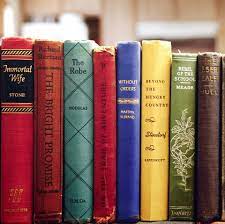
Wanted to check out what John Grisham has written recently. The short answer is – a very weak book. He is bored of himself and it shows. The book is repetitive, banal, and flat. The “racial card” is played without passion.The thrill is gone…
Tag: novels
Books: Paris: The Novel. Edward Rutherfurd, 2013
Could not finish this book by internationally best selling author of historical fiction Edward Rutherfurd.
It is a combination of a Paris tour guide and a soap opera intertwined with French history on high-school level.
Think about the vast audience out there that actually reads Rutherfurd – readers endowed with intellectual naivete and literary innocence…
Books: My Struggle – Part 1. A Man in Love – Part 2. A Novel by Karl Ove Knausgaard, 2012, 2013
I resisted liking My Struggle. It won me over slowly after I had finished the first half of the book and at the end of it I was convinced that it is one of the best books I have come across recently. The ending of the first part of My Struggle (the events following the death of Karl Ove’s father) is an example of some truly great writing without even trying to be one. This is actually the secret of the book – it is great literature pretending to be a documentary account of simple everyday events. The book has some of the magnificent qualities of Scandinavian literature – the somber tone, the harrowing honesty to oneself to the point of self-flagellation and to the point of cruelty when it concerns the others, the fearless embrace of life. It is written in the great tradition of Ibsen, Strindberg and Bergman…And of course, it owes a lot to Proust but in a sense, it is also quite anti-Proustian. This book deals with the nature of memory but not in the narcissistic way that can be so boring in Proust. It dwells on the minutiae of life with a sense of desperation – the desperation that life has no essence, that there is nothing beyond the string of fleeting moments which can never be satisfactory because one is always speeding towards the next moment dreaming that it would be more complete. The sense that the present cannot be truly experienced because one always is in want of something else.
I have never been so conscious of the oppression of small talk and socializing as after reading Knausgaard. His account of a child’s birthday party is more valuable than a book with dozens of fictional characters vainly searching for happiness. His descriptions of a drive home after a failed attempt at vacationing with his family, or a Christmas party with friends, or trying to return a soup in a restaurant, or just smoking outside his apartment building and observing the kids’ play, etc. etc. — are more insightful than hundreds of pages of many (critically acclaimed) novels.
Sometimes, the emotions conveyed are so true, so close to reality, that because of that lack of fictional distance between the narrator and the reader, one just wants to close the book and cry.
I don’t want fiction, I want to read Knausgaard.
“Too much desire, too little hope“
Knausgaard
Books: Troubling Love. A novel by Elena Ferrante
I decided to give a second chance to Ferrante hoping to read something of the quality of Days of Abandonment. Troubling Love is satisfying to an extent. It is a bold and ambitious book which tries to capture the complexities of a mother-daughter love-hate relationship. The narrator Delia, struggles to understand her relationship with Amalia, her mother, on the day after her mother’s death by drowning. As Delia puts it quite appropriately at some point: “I was here to cross a line”. And she does cross that line. Occasionally, she also crosses the line of literary taste getting lost into convoluted psychoanalytical kitsch. Had the narrative been simpler, crisper, Delia’s digging into the past in order to recover the truth buried under convenient post-factum rationalizations and lies, would have provided a more revealing and cathartic experience. The “truth” about Amalia’s past, not surprisingly, revolves around her husband’s jealousy, his violence, her lover (imagined by her child-daughter), her repressed sexuality. Delia both wishes for, and hates and fears her mother’s erotic liberation. One of her childhood memories is of her sitting with her parents in a summer theater, her mother furtively glancing around in the dark, her father possessively putting an arm around her shoulder: “Amalia after a stealthy look sideways, curious and yet apprehensive, let her head fall on my father’s shoulder and appeared happy. That double movement tortured me. I didn’t know where to follow my mother in flight, if along the axis of that glance or along the parabola that her hair made in the direction of her husband’s shoulder.I was beside her, trembling. Even the stars, so thick in summer, seemed to me points of my confusion. I was to such an extent determined to become different from her that, one by one, I lost the reason for resembling her.” Good writing.
Books: A Glass of Blessings. Novel by Barbara Pym
I read this novel because it was recommended by Adichie, the Nigerian novelist and author of “Americanah”. I can see why she was interested given Nigeria’s anti-gay laws.
This is the type of British fiction where you come across sentences like this: “I was glad to be alone in my room, with the view over the garden, well polished mahogany furniture, pink sheets and towels, and a tablet of rose-geranium soap in the washbasin” or like this: “He is the kind of person who ought to have a steady unearned income.” There is a Jane Austin feel to it and the whole plot revolves around a mysterious Mr. Darcy type of character who disturbs the church going and charitable tea party routine of the heroine, a young rich bored Londoner. The great twist here is that Mr. Darcy is gay. A delightful reading. A very subtle novel about sexuality and homosexuality without these topics ever being mentioned or touched explicitly – a 70s novel…
The Days of Abandonment. Elena Ferrante, 2002 (Translated from Italian by Ann Goldstein, 2005)
Ferrante is one ferocious writer. What a tight, powerful prose, a “turn of the screw” narrative! Her style reminds of the classical 19 c novel, most of all — Tolstoy. The story of an escalating passion-slash-madness brings to mind “The Kreutzer Sonata.” Anna Karenina is also invoked by the protagonist herself (“Where am I? What am I doing? Why?”) as the thoughts of self-destruction become overwhelming.
This short novel enacts Everywoman‘s nightmare: the threat of the young blonde, betrayal, abandonment, lost beauty, aging, self-loathing, alienation, hate, loneliness – all fears, complexes and guilt, entangled in one hard knot. Ferrante writes without a shred of sentimentality, she does not nurture illusions or promise happiness. Through all the stages of the protagonist’s downfall and madness, Olga remains an honest narrator. She observes herself dissecting herself – and does that not coldly bur rather passionately, mercilessly.
As Olga pulls the pieces of her soul together slowly, it is not hope that she offers at the end, but solace: “There is no depth, there is no precipice. There is nothing.”
Looking forward to reading Ferrante’s other novels.
The Dream Life of Sukhanov, A Novel by Olga Grushin, 2006
My first problem with this book is the way the author was introduced on the dust-jacket of the book – she turned out to be the first Russian to ever get a degree from an American University, an interpreter for President Carter during his visit in Soviet Russia, a descendent of a dissident social sciences professor who taught in the 60s in Prague, and finally – a Research Analyst at a law firm (after getting a BA from Emory). Well, anybody who is slightly familiar with reality (especially the East European one of the 60s-90s) can’t help noticing that there is something wrong with this glorious picture.
That set aside, Grushin is not entirely devoid of literary talent. Her style is good, although comparing her to Nabokov and Chekhov, as some of the (marketing) reviewers do is quite a stretch. Grushin has tried to write a novel about a Russian totalitarian typage, an artist who has sold his beliefs and his talent for material comfort and a secure position in the totalitarian hierarchical scheme of Soviet life. She is tracing his downfall at the time of the perestroika. An ambitious and complex task! The author is very deft describing the culture and mores of the totalitarian intelligentsia – a fact that suggests her first-hand knowledge of that culture. The attempt to seek a redemption for her character in religion – Sukhanov’s seeking refuge in a deserted Khram – is unconvincing and too much of a (Russian) cliche to provide closure for the drama of the hero…
There were some nice images here and there (although the general sense was of a dragging narrative) – for example, the well written scene of the hero observing the reflections of the totalitarian city in the Moscow river – and the shimmering reflections suggesting a city trapped down, under the water — the mystical alternative for a better world…
The Russian Debutante's Handbook, Gary Shteyngart, 2002
A Russian-born author and an immigrant character. Through his main character, Vladimir Girshkin, a twenty something Jewish immigrant in America, Shteyngart traverses the world of successful, Americanized professional immigrants (the hero’s parents), the world of liberal New York academics (the hero’s girlfriend and her parents), the Russian mafia in America and Eastern Europe, and the crowd of American expatriates in post-communist Prague with one purpose only — to make fun of them. And he is very good at it! The witty monologue of his cynical hero is what holds the story together. The character’s trajectory in itself is not very original but his commentary is hilarious. If I have to compare Jonathan Safran Foer’s prose, another author who tries to capture the Russian idiom in English language, to Shteyngart’s – I have to admit that the task of the latter was much harder – he captures the hilarious mutation of the Americanized Russian idiom mixed with the cliches of the Americans’ notions of Russianness. And again – this was a winning approach.
The History of Love. Nicole Krauss, 2005
One of the most overrated books I have come across! Belongs to what I would define as “learned graphomania” – a perfect sample of the latter. Obviously a lot of formal education and a lot of a labour went into creating the novel. Graphomaniacs are very industrious and sometimes the complexity of effort can pass for complexity of mind. Not in this case, anyway.
Nicole Krauss was a runner-up for the Orange literary award? She is so mediocre compared to Zadie Smith, the winner.
The story is convoluted and contrived. The very notion of “love” – the premise on which the whole book is supposed to build, is lacking. The book is tasteless in its efforts to imitate Borges, or Marquez, or Eco, or whoever she is trying to be. Images such as the man made of glass are preposterous, ridiculous – the character has to put a cushion on his behind when seating?! – how more helpless the imagery can get… Or, take for example, the whole idea of the “age of silence”, or the idea of a man dancing from grief (after learning about the death of his son…) – I can’t even comment on the lack of literary talent or originality that makes a book a helpless vehicle of narcissistic self-envisioning as a writer. Because, that is why N. Krauss has taken to writing – she wants to be a member of a highly regarded (by herself) club – that of writers. Well, unfortunately, membership is open to the public, but not necessarily to people with money or Oxford University degrees.
Everyman. Philip Roth, 2006
This is a great book! It felt like a punch in the stomach – the sensation of reading it is almost physically painful…This is the American “Death of Ivan Ilych” written with the cruelty, and compassion, and lack of sentimental pity typical of a Tolstoy. The story of Everyman is the story of betrayal – the graduate betrayal of our body perpetrated on us with inevitability and indifference. It is also about the betrayal we commit against others and the loneliness of both – happy and unhappy creatures. There is a great scene towards the end of the novel, which compares to the grave-diggers scene in Hamlet. Yet, it the book is totally devoid of philosophizing. The language is matter of fact, simple, and bruising.
You have to have guts in order to read this book, let alone – write it.
 No lipstick! Book & Film Reviews