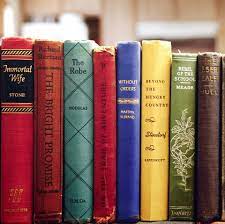
Books: The Casual Vacancy. A Novel by J.K. Rowling, 2012

A nice flow of classical prose reminiscent of Dickens (less brilliant though). A tale of two cities divided by class and race. Characters are introduced with their physical characteristics, usually suggestive of their class and moral potential. The action unfolds slowly, tugged forward by small, mundane events that define the everyday life of a community – work, school, child-parent relationships, first love, partnerships, neighbors, envy, ambitions, heartbreak, etc. Sentimental strings are pulled, tragedy and regret abound, nothing can’t be overcome… Post-catastrophe, an optimistic veil drops over reality.

The novel’s episodic structure makes it suitable material for a TV series.

Books: The Names, A Novel by Florence Knapp, 2025

The novel is celebrated as a remarkable debut… How is the quality of a book relevant to whether it is a first or a last one? It is also praised for being “original” – precisely the quality that it lacks. One can easily detect how it was planned and designed (or rather concocted) to achieve the effect it has on part of the female reading public. One can hardly imagine a male having any interest in this book.

Its “scheme” is so transparent that it is offensive….It is a novel that could be AI-generated or could be a product of a young achiever who just completed her Creative Writing class with an A+. It demonstrates certain skills on a sentence level. As a whole, it is simplistic and schematic. Its premise is preposterous – the different names a woman can select for her son determine his fortune. The first choice is the name of the abusive father, Gordon, the second is Julian, preferred by the mother, and the third is Bear, picked by the child’s sister. Predictably, the wildest choice leads to the happiest life story, while the name “Gordon” dooms the bearer of this name.

Obviously, the book is about the choices a woman can make to set herself free from an abusive marriage. How many more books can the female audience digest and laud that tackle abusive marriages? What does the book add to the artistic interpretation or psychological analysis of the issue? I can’t see the point. But this is the damage that the book club culture and creative writing classes have brought upon literature. Anyone who can read and write thinks that “there is a book in me”. The book clubs brainwash the potential reader with mediocre standards where everyone can “relate” to plots and characters using their own experience. No one has ever taught them that books are not to be judged from “experience”.

In addition, the whole notion of “female writing” – who came up with this nonsense? But now it has become like a self-fulfilled bad prophecy! There is now a “female writing” called to life, and it is bad. Did Mary Shelley write like a woman? No and no!

The book clubs and their followers created trends where books like “Flow Like a River” and “Where the Crawdads Sing” became the standard of female writing. Books where woman is one with nature and nature is one with woman…The funny thing is that these writers are thought to be “feminist” while they are promoting and reinforcing the most patriarchal trope of womanhood – the “nurturer”, the “earth”, the “procreator”. And because these books are successful, they become the model for future creative writing students to perpetuate that trend. How very annoying!

Yellowface, Novel by R.F.Kuang,2023

What starts as an excellent, witty satire of the publishing industry ends as a boring attempt at changing the genre of the book and turning it into something like a mystery or a psychological thriller.

The most powerful part of the book is the one describing June’s options offered by her publisher as a spec writer after her disgrace as a plagiarist. It is a scathing satire on the “check-box” approach to fiction writing – the author is aiming to tick certain thematic or political or purely propaganda boxes: e.g. race, identity, feminist agendas, patriarchy, etc. Kuang’s own book is ticking one such big check-box – “cultural appropriation”. Hence the title “Yellowface”. Yet, the most important issue the book touches upon is “what exactly authorship is”! Is using somebody else’s story plagiarism? And unfortunately, Kuang tends to side with the wrong answer – that it is. As if you can’t write about experiences that you have not personally lived through… Or you can’t write about a race you don’t belong to… Kuang seems to forget that writing is “expression”, it is about the “how” and not about the “what”. Recent literature though, which manages to get in the spotlight, borders on propaganda – it is more interested in the “what”. It is enough to look at some of the major fiction awards! Or The New York Times’ book recommendations…

Books: Days at the Morisaki Bookshop, Novel by Satoshi Yagisawa

What is the appeal of a Japanese novel of 150 pages that makes it an international bestseller? The novel is very unpretentious and uneventful with a very light plot and still a page-turner.

The narrative takes you through the ordinary lives of ordinary people with a low horizon of expectations from life – nothing beyond love, work, and family. A hike in the mountains is described so simply and effortlessly that it has the effect of a still-life painting. It focuses your gaze and sucks you into the reality of the everyday made to look mysterious and strange through the power of language. It makes the coolness of the night breeze or the fatigue and excitement of a mountain climb acquire a fresh deep meaning.

There is a lot of melodrama but it is so mellow and tender that creates a sub-genre of its own. Let us call it – the mellow-drama. The painful is combined with hope, death is not an end.

Books: The Lying Life of Adults. A Novel by Elena Ferrante, 2019

I have previously had mixed feelings about the writings of Elena Ferrante. My esteem of her rose after the film adaptation of “The Lost Daughter” by Maggie Gylenhaal, a truly original and thought-provoking film. My initial complaints about her fiction were related to the first part of the Neapolitan quartet – “My Brilliant Friend” which I found cliched and uninspiring, especially her very traditional class-struggles approach. In contrast – I was impressed by “Those Who Leave and Those Who Stay” which is an example of an in-depth look into the motherhood and womanhood themes of her previous books and a sort of more incisive continuation of “The Lost Daughter.” In the former, I enjoyed the string of character studies – contradictory and complex, the prose – dense and subtle, the non-judgemental representation of opposing kinds of “femininity,” the ambiguity of female strife for independence as a mix of libration and egotism. “We all narrate our lives as it suits us.” writes Ferrante. This is the powerful message of “Those Who Stay and Those Who Leave” – and it is the meta-revelation of the first-person narrative in that novel.

In “The Lying Life of Adults,” this principle is taken to a level of arbitrariness. An exceptionally smart girl, the author wants us to believe, is debunking the “narrative” of the adults that surround her as lies. Doing that she builds her own, supposedly innocent and honest, narrative. Not a new thing, by the way (i.e. What Maisie Knew) . The problem with the narrative of the coming-of-age girl, is that at some point the “disbelief” cannot be suspended. It becomes impossible to give credit to her unusual for her age intelligence, her interest in higher matters of politics and philosophy, the impression she creates for adults and peers, and her supposedly penetrating representations of the adults in her life. This time, Ferrante is invested too much in binary oppositions: ugly-beautiful, dreamy-cynical, rich-poor, entitled-self-made, so that instead of transforming into psychological “depth” the oppositions come across as confusing and arbitrary. In the main character’s narrative everything becomes possible and hence — not engaging.

Books: All the Lovers in the Night, a Novel by Mieko Kawakami, 2022, originally published in Japanese 2011

My first experience of Mieko Kawakami’s writing, a novelist and poet from Osaka. Very impressive talented prose! The first half of the novel is a fascinating in-depth description of excruciating loneliness.

A socially awkward Fuyuko, the protagonist, a proofreader by profession, finds it extremely hard to communicate with people. She discovers that having a drink helps. Slightly ironic and hurtfully honest, the narrative progresses through the daily ordeals of being alone. Proofreading becomes a metaphor for a specific attitude to life – reading without really getting into the content of the book but just looking for the errors in it… Another topic that is developed intricately to reach metaphorical power is the physical aspect of light and color. Kawakami’s descriptions of the mundane sometimes reach Knausgaardian dimensions.

The “female condition” is represented in several well-written scenes – the protagonist examining the shelves of a modern bookstore self-help section, her first sexual experience, her conversations with two female friends – the “happily married with children” one, and the “sleeping around fashionista.” Kawakami is not interested in making judgments, she is recording the female tragi-comedy in a cool incisive style.

The second half of the novel, with the appearance of a love interest, is more banal as a story because it is seasoned with the hope of happiness for the main character. And the hope of happiness takes a trivial form, promising the reader an American rom-com finale. But no, Kawakami is not providing one. An appropriate ending for a novel like this is finding strength to triumph over disappointment.

Books: The Lake by Banana Yoshimoto, 2015

Have not had much luck with American novels recently so I decided to switch to Japanese literature…Really, everything that I started reading from Bestseller lists or Book Club lists was unimpressive as literature, “literal” or lacking in style (e.g. The Lions of Fifth Avenue”) or “checking boxes” propaganda type (e.g. The Heaven and Earth Grocery Store by James McBride.) American fiction is becoming more of a “socialist realism” type of fiction, propaganda over belle lettres, politics over art….

So, here it goes – a Japanese novel. It was a strange experience. It is short, compared to American novels, obviously, Japanese publishers don’t have a recommended word count for a novel…It is definitely engaging – the existence of a secret is planted at the beginning of the novel and its disclosure represents its very end. It describes the relationship of two very fragile, very strange characters with a combination of naivete and depth that strikes me as a feature of modern Japanese literature. Here, for example, is a line, that I remembered: “You never know you are happy until later”…Simplicity and depth at the same time is very appealing. At times, the simplicity starts to dominate the narrative, unfortunately, and you are left with some very banal observations. On the other hand, Yoshimoto can definitely create haunting scenes – reminiscent of Gothic literature.

TV: Ripley, 2024, Dir. Steven Zaillian

Hands down – the best thing about the new version of “Ripley” is its black-and-white cinematography – kudos to Robert Eslwit!

Otherwise – it seems that the driving force behind the making of a new film version of Patricia Highsmith’s novel was Andrew Scott who so badly wanted to play Ripley! And there is the rub…because he is not for that role, he lacks the “charmer” aspect (even though we found him very charming in Fleabag.) And you wonder what draws these people to him?! Why would Greenleaf senior ask this particular man to persuade his son to come back from Italy? Scott (and the director) obviously emphasize the class aspect of the character – a person from the lowest strata of society, who wants to become one of the high society, who mimics their tastes, aspires to appreciate art and enjoys being surrounded by beautiful objects but at the same time has the audacity to criticize his wealthy companions for being too bourgeois (the whole line with the ice-box). So, Ripley’s is a story of hatred for the upper classes but also a deep desire to join their ranks. Scott also focuses on the sinister aspect of the hero. He is sinister even when he plays nice, of he just can’t do the latter…

Comparisons with Matt Damon and Alain Delon are inevitable and don’t go in favor of Andrew Scott.

The series becomes tedious at some point because of the lot of “fluff” in the footage just meant to turn this into a series (with a second season probably coming up, on top of that…) There are some ridiculous parts in the film – one that stands out is the “analogy” with the criminal Caravaggio! An episode that was original and striking, mostly because of the cinematographer, was the one about Dicky’s murder, an elaborate and haunting nail-biter…

TV: Feud: Capote Vs The Swans, 2023, Creator Ryan Murphy, Dir. Gus Van Sant, Max Winkler, Jennifer Lynch

Unfortunately, the second installment of Ryan Murphy’s “Feud” is not as good as the first one. The dramatization of Betty Davis’ and Joan Crawford’s conflict was really great! It involved the manipulated context of this feud, the role of the media and the industry, and two great characters – it was a really demo of dramatic writing and a great pleasure to watch with the excellent performers!

“Capote Vs The Swans” lacked the dramatic energy that draws you in, the “feud” was illustrated, not acted out. The focus was on Capote’s idiosyncrasies, his loneliness, self-destructive behavior, narcissism, relationship with his mother, etc. (Tom Hollander was great playing Capote.) But the characters on the other side were underdeveloped, they were an illustration of an age long gone now, they were the “swan song” for the socialites of 1950s New York. The series strong point was the nostalgic feeling it induced despite the intended “criticism” of the New York high society from that time. An elegy for the women who were buying their “gardening hats” at a particular time of the year or who were fussing about the perfection of the edges of the invitation cards …was that ironic or sad or glamorous! It seems – the latter…And you could sense it in the way the “swan” performers enjoyed playing their roles – Naomi Watts, Diane Lane, Calista Flockhart, Chloë Sevigny….

Film: Poor Things. Dir. Yorgos Lanthimos, 2023

Unfortunately, the film is not as good as its costume design and its production design! Comedy it is not, as it has just one witty one-liner: the prostitutes going to a socialist meeting remarking that “they own their own means of production.” This director is entirely lacking a sense of humor, unless you consider humorous some CGI images of pig-birds, or a scientist slicing brains…

The rest is at times confusing and at times very flat and didactical one-dimensional allegory of a woman’s “story of liberation.” And no, Mr. Lanthimos, the clitoris is not the fountain of a woman’s power or freedom or whatever it is you want us to believe it is. Things are a little more complicated than that…Even as an allegory, the film does not make much sense or impress as an original or cogent conceptual piece. A sort of a “Frankenstein” woman, gets her unborn child’s brain implanted in her own head. She is robot-like and “soul-less”, she “discovers” sex and pleasure in an appropriately robot-like and soul-less way, then she discovers social injustice, but then this story-line is not taken any further as a philosopher (of sorts) tells her that there is no way of making the world a better place. Regardless, she tries to improve the world by becoming a prostitute, and then after being claimed by her former husband who caused her death returns to him only to discover (again) that she is free and can kill him. Finally, the heroine finds solace in science?! The key allegorical figures – the father, the lover, the husband, and the nice guy – are made up of banalities and utter banalities to the most boring effect. Emma Stone definitely has better roles. I felt sorry for her being limited to performing so “physical” a role — playing a brainless robot in the first half of the movie and during one third of the film being engaged in graphic sexual scenes. Talk about women’s liberation! This is the deepest irony of the film. The director’s obsession with sex has been demonstrated time and time again in his previous films- and it does not go beyond that, a mere obsession, because the representation of sex in his films does not transcend anything or explain, or enlighten, or analyze… It is disturbing because it is too literal. I wonder how he is getting away with this. There is no lack of snobs in the audience and the industry, I suppose…

And a wonderful actor like Mark Ruffalo, has to play this ridiculous character, a simplistic puppet — that is almost a cinematic crime perpetrated by Mr. Lanthimos. But he has done it before — to Olivia Coleman and others…