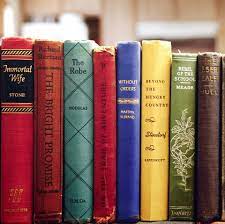
Books: What We Can Know, A Novel by Ian McEwan, 2025

The novel offers variations of all possible answers to the question “What can we know?” The answers, as expected, are pessimistic. In a world overwhelmed with data and a digital cloud heavy with “knowledge” about everyone and everything, it is still possible to manipulate memory and history as we struggle to “know”. “Most of life is oblivion,” one of McEwan’s characters argues. The truth about the past is unattainable, as it is controlled by the living and by what they have decided to pass on. We can’t know ourselves or what we are capable of. Memoirs are misleading as we put our “better selves” on the page. In a dystopian post-catastrophic world, an age metaphorically named by McEwan – the Inundation (think climate change of catastrophic proportions), humanities and history are losing the attention of the young. The generation of the future is obsessed with the present. Still, a nostalgic professor from the 22nd century searches for a lost poem recited at a birthday party in 2014. This search reflects the author’s hope that literature will still matter…

While the first part of the novel takes place in the future and centers on the search for the lost poem, the second is a soliloquy of the woman to whom the poem was dedicated. It is the more captivating and emotionally engaging part. Here, the novel becomes a satire of sorts of a poet-genius and his literary circle. The poet suffers from “status anxiety” and “limited forgiveness for humankind,” and McEwan so detests him that he turns him into a murderer. Or did he have to do this because he needed to introduce some thriller element to his otherwise quite essayistic narrative?

Stylistically, McEwan is at the height of his craft; his message is melancholic and ironic.

Books: Heart the Lover, A Novel by Lily King, 2025

What an exquisite tear-jerker, impossible not to love! It is the perfect story about a love triangle, the choices we make in our youth, and the blurred line between love and friendship…

The novel follows three college friends, all passionately devoted to literature. It abounds in literary references as the characters spar, debate, crack jokes, and dissect their lives in an effort to impress one another. The narrator is in love with a boy whose closest friend is also in love with her. The first relationship eventually collapses, and the friend becomes her lover. He fathers a child with her but does not learn of it until his deathbed. He dies holding her hand, while her former boyfriend keeps vigil nearby. Stripped down to its bare plot, the story could easily sound like a soap opera. Yet one quickly realizes that “soap” does not define a novel as long as it is not part of its expression.

The reader gets immersed in the story of the girl as it is told by her – a reflection on growing up, a sensual narrative full of happy moments, dominated by the anticipation of happiness and future fulfilment that is only possible in youth, as well as by pain—pain that youth alone allows us to overcome. Even as the novel ends with death, the reverse perspective on time lived has a healing effect.

The entire book is illuminated by a line from The Aeneid, quoted twice: “Someday we will remember even these hardships with pleasure.” That very pleasure flows through the narrative, making the novel so profoundly moving.

Books: Long Island, A Novel by Colm Toibin, 2024

Colm Toibin returns to the heroine of “Brooklyn” – Eilis Lacey, the Irish immigrant, now married to Tony with two grown-up kids and somewhat stifled by the proximity and the routines of his large and closely knit Italian family. Then, quite unexpectedly, the haze of complacency, rather, inertia, is disrupted by the visit of a stranger and his shocking revelation. It is a classical device for opening a novel, and Tobin is a master of the craft of classical belle lettres. The narrative unfolds slowly with relentless drive towards tragedy. And I don’t mean “tragedy” in the Greek sense of the world; it is the Chekhovian type of tragedy of the mundane, where seemingly there is a space for choice that can turn one’s life around, but the characters gradually come to the realization that this choice is impossible.

After Eilis leaves her American home and returns to Ireland, as if to return to the past, the novel focuses on the love triangle – Eilis, Nancy, and Jim. Their fates are intertwined once again, as they attempt to actively manage their moves driven by subconscious complex desires; it becomes evident that fulfilling these desires is impossible. The story unfolds like a tragedy of timing, wrong timing rather, similar to Father Lawrence’s predicament in Shakespeare’s “Romeo and Juliet.” The messenger is “late!” If Nancy had announced her relationship with Jim earlier, if Eilis had given her answer sooner, if Jim were not that secretive, etc., etc. The strings and nets of coincidences so masterfully woven by Toibin become the meta-metaphor for the chaos of life, where decisions, big or small, are determined by so many factors, that the big picture is lost, the “why” is hard to answer, and the easiest choice is to return to the routine, to the choice of least resistance. And when you make this choice, it is pointing you in only one last direction – death. There will be no “turning a new page ” for any of the characters of “Long Island.”

One of the best novels I read recently – literature at its finest!