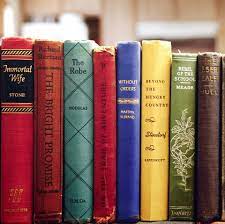
Books: They were sisters, A Novel by Dorothy Whipple (1943)

It is always a pleasure to discover an underrated female author from the twentieth century. This book felt like a welcome palate cleanser after the flood of mediocre works so aggressively promoted through social media, trade magazines, and even the book sections of reputable newspapers. It is impossible to keep up with every recommendation, yet many of them fall short as lasting literature. It seems that books gain attention more for the identity they represent rather than for their literary merit.

Dorothy Whittle is a master storyteller in the tradition of nineteenth-century critical realism. The fates of the three sisters are shaped by their marriages and their differing conceptions of love. The domestic dramas of the three sisters are rendered with an observant, almost detached narrative voice, in which the perspectives of the children play a crucial role. Through their eyes, the tragedy of Charlotte unfolds, and it is also through them that Lucy and Vera begin to understand their own situations as women and wives.

Charlotte chooses the role of the obedient wife, becoming a prisoner of her own weakness and, in the process, sacrificing her children. Vera, by contrast, is the free-spirited lover who prioritizes pleasure and personal freedom above all else—also at the expense of her children. Both paths prove ultimately self-destructive. The third sister assumes the role of the savior: accommodating, self-sacrificing, and compassionate. Yet she, too, is denied fulfillment—her marriage is sensible and stable, but devoid of romantic passion, grounded in friendship rather than romantic love.

This is not a feminist novel in the conventional sense. It largely upholds a bourgeois view in which a woman’s fate is determined by marriage. And yet, the depth and precision of the characterization allow the novel to transcend this framework. It offers a subtle and compelling portrayal of a shared malaise—a melancholic dimension of the female psyche rooted in the constraints placed upon women’s choices.

Books: The Names, A Novel by Florence Knapp, 2025

The novel is celebrated as a remarkable debut… How is the quality of a book relevant to whether it is a first or a last one? It is also praised for being “original” – precisely the quality that it lacks. One can easily detect how it was planned and designed (or rather concocted) to achieve the effect it has on part of the female reading public. One can hardly imagine a male having any interest in this book.

Its “scheme” is so transparent that it is offensive….It is a novel that could be AI-generated or could be a product of a young achiever who just completed her Creative Writing class with an A+. It demonstrates certain skills on a sentence level. As a whole, it is simplistic and schematic. Its premise is preposterous – the different names a woman can select for her son determine his fortune. The first choice is the name of the abusive father, Gordon, the second is Julian, preferred by the mother, and the third is Bear, picked by the child’s sister. Predictably, the wildest choice leads to the happiest life story, while the name “Gordon” dooms the bearer of this name.

Obviously, the book is about the choices a woman can make to set herself free from an abusive marriage. How many more books can the female audience digest and laud that tackle abusive marriages? What does the book add to the artistic interpretation or psychological analysis of the issue? I can’t see the point. But this is the damage that the book club culture and creative writing classes have brought upon literature. Anyone who can read and write thinks that “there is a book in me”. The book clubs brainwash the potential reader with mediocre standards where everyone can “relate” to plots and characters using their own experience. No one has ever taught them that books are not to be judged from “experience”.

In addition, the whole notion of “female writing” – who came up with this nonsense? But now it has become like a self-fulfilled bad prophecy! There is now a “female writing” called to life, and it is bad. Did Mary Shelley write like a woman? No and no!

The book clubs and their followers created trends where books like “Flow Like a River” and “Where the Crawdads Sing” became the standard of female writing. Books where woman is one with nature and nature is one with woman…The funny thing is that these writers are thought to be “feminist” while they are promoting and reinforcing the most patriarchal trope of womanhood – the “nurturer”, the “earth”, the “procreator”. And because these books are successful, they become the model for future creative writing students to perpetuate that trend. How very annoying!